Are We Raising Children Who Know How to Be Good Friends?

July 30, 2026

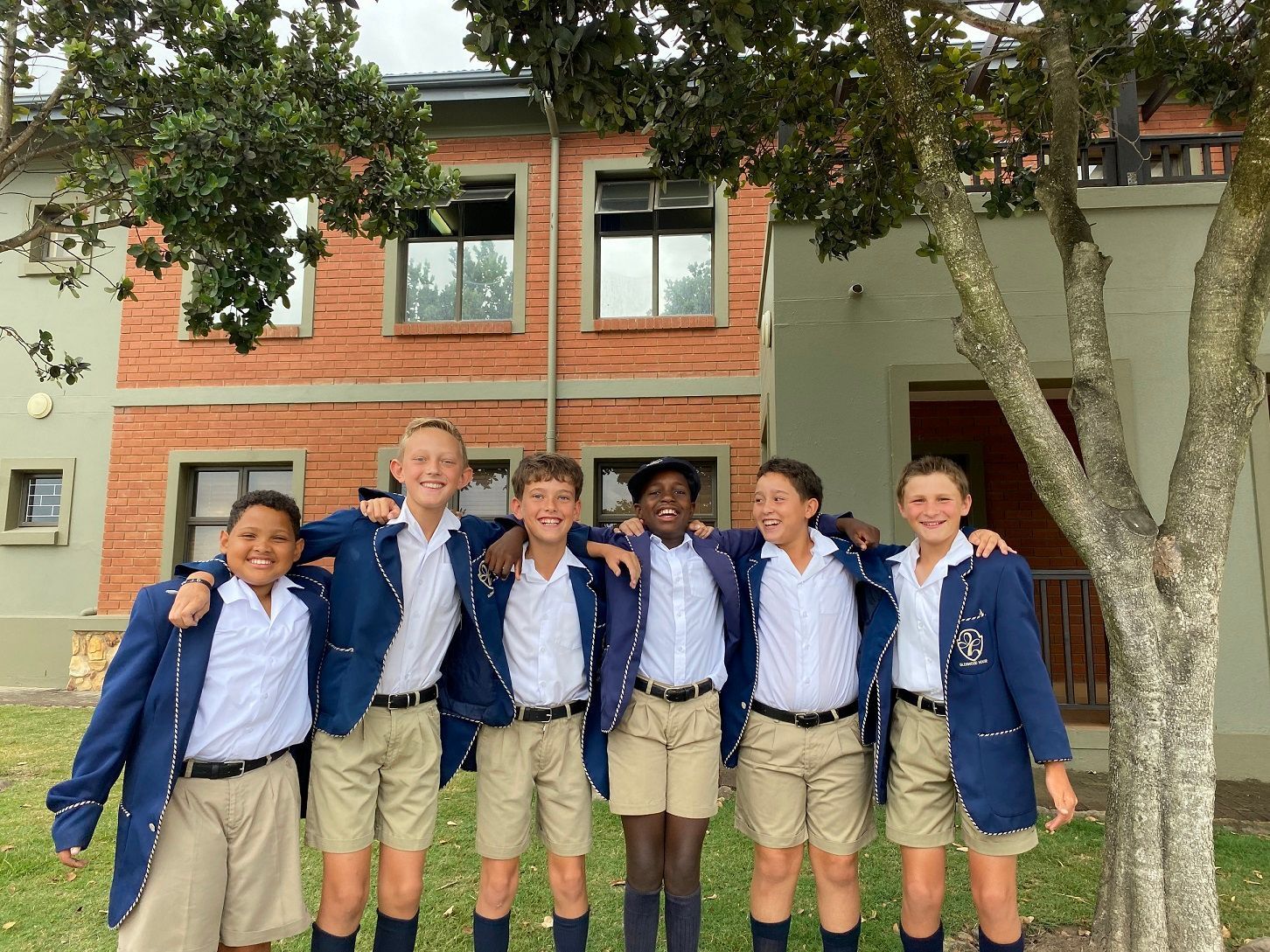
This International Day of Friendship, 30 July, Glenwood House explores why kindness, loyalty, empathy and accountability are essential qualities for building meaningful relationships.

Parents often worry about whether their child has enough friends, receives invitations or feels included. A more valuable question, however, may be whether their child knows how to be a good friend.


Friendship is often viewed as something young people should receive: acceptance, companionship and a sense of belonging. Meaningful friendship also asks something of them. It requires kindness, reliability, honesty, forgiveness and the courage to take responsibility when mistakes are made.


This International Day of Friendship, Glenwood House encourages families to shift the focus away from popularity and towards raising young people who make others feel valued, respected and included.


“Children naturally want to belong, but belonging should not depend on changing who they are or seeking approval at any cost,” says Lindi Nieman, Head of Pastoral Care of Glenwood House Preparatory. “A healthy friendship allows both people to feel safe, heard and accepted. Children also need to understand the important role they play in creating that kind of relationship for someone else.”


Friendship begins with everyday choices


Good friendship is rarely built through grand gestures. Small, consistent choices often matter most: saving someone a seat, noticing when a classmate is alone, keeping a promise, listening without interrupting or offering encouragement after a difficult day.


Schools provide young people with daily opportunities to practise these qualities. Classrooms, playgrounds, sports fields and cultural activities all become spaces where students learn to share, cooperate, resolve disagreements and appreciate different personalities.


“Children learn about friendship by experiencing it, observing it and practising it,” says Carla Pringle, Head of Pastoral Care of Glenwood House High School. “Teachers and parents can guide them, but children also need opportunities to navigate relationships, make mistakes and learn how to repair the hurt they may have caused.”


Such lessons can be uncomfortable. A child may exclude someone, break a confidence, speak unkindly or fail to support a friend. Adults may feel tempted to solve the situation immediately, yet these moments can become valuable opportunities for growth.


Saying “I am sorry” is important, but a meaningful apology goes beyond the words. Children should learn to acknowledge what happened, understand how their actions affected another person and consider what they can do differently next time.


“Accountability is not about shaming a child for getting something wrong,” Nieman explains. “It is about helping them recognise that their choices affect other people. Taking responsibility builds trust, emotional maturity and stronger relationships.”


Forgiveness is equally important. Young people need to know that friendships can survive misunderstandings when both parties communicate honestly and show a genuine willingness to repair the relationship.


Not every friendship should be preserved, however. Children also need guidance in recognising unhealthy dynamics, setting appropriate boundaries and understanding that loyalty does not mean tolerating manipulation, cruelty or repeated disrespect.


Moving beyond the popularity contest


Social media and peer pressure can create the impression that friendship is measured by numbers: invitations, messages, followers or the size of a social circle. Quality remains far more important than quantity.


One dependable friend may offer greater emotional security than a large group in which a child never feels fully accepted. Parents can support this understanding by avoiding comparisons and showing interest in how friendships make their child feel rather than focusing only on how many friends they have.


Helpful conversations might include questions such as: “How did you help someone feel included today?”, “What do you value in a friend?” or “What could you do if someone was sitting alone?”


Pringle adds: “Children notice the way adults speak about friends, handle conflict and respond when someone disappoints them. Respect, honesty and forgiveness become far more meaningful when young people see those qualities modelled consistently at home and at school.”


Strong friendships contribute to confidence, resilience and emotional wellbeing, but their value extends beyond childhood. Young people who learn how to listen, apologise, include others and act with compassion carry those abilities into future relationships, workplaces and communities.


International Day of Friendship offers a timely reminder that raising socially confident children is not only about helping them find connection. It is also about teaching them to become the kind of people others can trust.


Popularity may come and go. Kindness, loyalty, empathy and accountability create something far more lasting: friendships in which every person has the opportunity to feel seen, respected and valued.
July 7, 2026
Patience at the Crease: How Glenwood House Alumnus Jean du Plessis is making his mark in Professional Cricket International cricket, academic success and a healthy respect for early morning training sessions have shaped a journey built on discipline, determination and a love of the game Dreams of sporting greatness often begin on school fields, in practice nets and during long afternoons spent imagining what the future might hold. Glenwood House alumnus Jean du Plessis turned those dreams into reality, building a professional cricket career that has taken him across South Africa and onto the international stage. Since matriculating in 2016, Jean has represented South Africa at the ICC Under-19 Cricket World Cup, played provincial cricket for SWD, joined the Warriors franchise and earned selection for South Africa A tours against India, England and Sri Lanka. Academic success has accompanied those achievements, proving that life beyond the boundary rope can be just as important as life on it. Favourite memories of Glenwood House centre around friendships and sporting adventures. Hockey tours to Kingswood, Stellenbosch and Cape Town remain highlights. "Being surrounded by some of your best friends and occasionally missing a few classes made those trips unforgettable," he laughs. Cricket may have become his profession, but another path almost claimed his attention first. "As a young boy I wanted to be a professional tennis player before cricket eventually won," he says. Business and accounting also captured his interest during his school years. Mentors encouraged him to continue studying while pursuing professional sport, advice that would prove invaluable. "Success in sport is never guaranteed. A professional qualification creates opportunities and provides security for the future." Balancing cricket and postgraduate accounting studies required plenty of discipline. Early mornings, late nights, online examinations while travelling and constant communication between coaches, administrators and university lecturers became part of everyday life. "At the time, I simply tried to give my best to both." A significant turning point arrived when Jean earned selection for the South African Under-19 team. "That was when cricket started feeling like a genuine career possibility. Wearing the Proteas blazer at official functions was incredibly special." Several milestones stand out when reflecting on his career so far. A first professional century provided the confidence that he belonged at that level. A remarkable match that included both a double century and a century elevated him into an elite group of South African cricketers. A century on his South Africa A debut against India further strengthened his belief that international cricket could be within reach. Patience has remained one of the defining themes throughout his journey. "Run your own race and avoid comparison. Everyone's path is different and timing matters." Professional sport often appears glamorous, yet Jean is quick to point out the realities that many people never see. "Cricket can be quite lonely at times. Players spend long periods away from family, friends and loved ones. Building lasting routines and relationships can be challenging." Family, friends and his fiancée have provided constant support through every high and low. "They understand me as a person, not only as a cricketer. That support is priceless." Away from the game, Jean enjoys travelling, golf, padel, running and spending quality time with loved ones. A recent trip to the South of France ranks among his favourite life experiences, although a day on the golf course remains a close contender. Looking back, Glenwood House played an important role in preparing him for the demands of balancing academics, sport and personal growth. "The school taught me the importance of academics, time management and communicating effectively with teachers when commitments overlapped." Current students can take plenty of inspiration from Jean's story. Ambition, hard work and talent may open doors, yet character, education and resilience help keep those doors open. Success, in his view, is measured less by trophies and statistics and more by living according to your values, giving your best effort and continuing to learn. One piece of advice stands above the rest. "Don't be afraid to make a fool of yourself trying something new and build as many friendships as possible while you're young." Cricket has already taken Jean to some extraordinary places. Lord's Cricket Ground remains a dream destination still waiting to be ticked off the list. Judging by the patience, determination and perspective that have defined his journey so far, few would bet against him walking onto that famous field one day. QUICK FIRE: Early morning training session or evening practice? Early morning training, just like I used to in the Glenwood indoor nets. Test cricket or T20 cricket? Test cricket Best cricket pitch in the world? St. George’s park/Newlands Beach or bushveld holiday? I grew up at the ocean, so I’d have to say bush. Coffee or tea? Coffee, always! Biggest sporting hero growing up? Cricketing hero: AB de Villiers & Jacques Kallis. Other sporting hero’s: Rafa Nadal One word that describes Glenwood House? Family oriented One word that describes your journey so far? Patience Best advice you have ever received? “Success is not final, failure is not fatal: it is the courage to continue that counts” Favourite way to spend a day off? Golfing
By Tersia Scholtz June 11, 2026
Loud laughter across a playground. Tiny hands digging for imaginary treasure. A cardboard box transformed into a rocket headed for the moon. Childhood is filled with magical moments that may look like simple fun, yet remarkable learning is happening every second. "Play is childhood," says Tersia Scholtz, Principal of Glenwood House Primary in George. "It's how children make sense of their world, their relationships and themselves." Through play, children develop confidence, curiosity, friendships, resilience and a stronger understanding of who they are. Play is not a reward after learning. Play is learning. Every muddy puddle becomes a science experiment. Every game of hide-and-seek teaches strategy and problem-solving. A pretend tea party or pirate adventure develops communication, creativity and collaboration without children even realising it. Young students learn best when they are curious and actively engaged. A tower built from wooden blocks teaches balance, perseverance and engineering. A pretend restaurant becomes a classroom for maths, language and teamwork. As Scholtz explains, "Play creates meaningful learning experiences because the child is invested in the process, not simply completing a task." Imagination transforms ordinary moments into extraordinary adventures. One-minute children are pirates crossing an ocean, and the next they are veterinarians caring for an injured puppy or astronauts discovering a distant planet. "Imaginative play is where children practise being thinkers," says Scholtz. "They negotiate roles, solve problems, create stories and communicate their ideas." These experiences build flexible thinking and creativity, skills that will remain valuable throughout life. Confidence often begins when something goes wrong. A collapsed sandcastle becomes an opportunity to build a stronger one. A puzzle that seems impossible teaches patience and persistence. Children learn to try, fail, adapt and try again, discovering that mistakes are simply part of the learning journey. Some of life's greatest lessons happen outside the classroom. Playground adventures teach sharing, empathy, cooperation and conflict resolution in ways that no textbook can. Teachers regularly witness students solving problems together and celebrating one another's ideas. Every type of play offers unique benefits. Outdoor play builds resilience and physical strength. Sensory play helps children explore and regulate emotions. Creative play encourages self-expression, while imaginative play stretches language and critical thinking. Physical activity supports healthy bodies and healthy brains. Nature adds even more opportunities for discovery. "There is something magical about children outdoors," says Scholtz. "Nature invites exploration in a way that few indoor environments can." Mud kitchens and sensory gardens encourage students to investigate, imagine and collaborate. She laughs that "muddy shoes are not always loved by our parents, but when they see the happy faces at the end of the day, it makes it all worthwhile." Technology also has a place when it enhances exploration rather than replacing it. Following severe storms in George, Glenwood House students used iPads to photograph damage around the campus before transforming their discoveries into artwork and animations. Their curiosity soon expanded into researching local wildlife, leading to investigations about stranded chameleons and experiments involving light and shadow. Scholtz believes this represents technology at its best, "not replacing real-world experiences, but enriching them, extending children's thinking and helping them make meaningful connections between their learning and the world around them." At Glenwood House Pre-Primary, play remains at the heart of every day. "We believe children learn best through exploration, discovery and meaningful relationships," says Scholtz. Classrooms are intentionally designed to spark curiosity while teachers use children's interests as the foundation for learning. Parents do not need expensive toys to encourage meaningful play. "Keep it simple," advises Scholtz. "Some of the best play comes from cardboard boxes, blankets, mud, sticks, dress-up clothes and time spent outdoors. Give children opportunities to be bored, because boredom often leads to creativity." International Day of Play reminds families that childhood should never be rushed. "Give children time to play, to explore, to create and to simply be children. The learning will follow," says Scholtz. Today's mud pie bakers become tomorrow's problem-solvers. Today's cardboard castle crafters become tomorrow's innovators. Great futures often begin with muddy boots, pockets full of treasures and imaginations that know no limits.